
Self-welcoming
Quick summary
TUB2016 brought together more than 80 participants to share experiences, present Tryton developments and shape future improvements. The event combined user stories, technology, integration, SaaS and several days of collaborative development to prepare new ERP releases.
Contents
This is my first blog post registered on Planet OpenERP. Indeed, this is my first blog post, though I've had my Blogger account for more than a year now, so it's time to start using it.
First of all, I wanted to thank Fabien for letting NaN participate in the OpenERP community and Planet. I think the Tiny company has certainly improved and understood the role of the community in the project, and I expect this to result in a benefit for everyone. As already noted by Pedro, the Spanish community has already organized itself with quite some success so far, and more is to come!
This blog will mostly be about the KDE client we've been developing at NaN, with help and feedback from the community. Here we have to thank Ferdinand Gassauer, Jordi Esteve and others for their valuable input and bug hunting.
We want the client not only to integrate nicely within KDE, but it has also been successfully used under Windows and Mac. I think developers should be particularly interested because, more than a powerful client for OpenERP, we want to provide a powerful development environment that extends OpenObject's power on the desktop. For such a task, it provides a Qt-based, easy-to-use RPC library, a Qt item model and other interesting features that I will discuss in subsequent posts.
Frequently asked questions
What is the blog mainly about?
It is mainly about the KDE client that NaN was developing for OpenERP with help and feedback from the community.
Which systems was the client intended to support?
The aim was for it to integrate well with KDE and also work successfully on Windows and Mac.
Which technical features of the client are highlighted?
The article highlights a Qt-based RPC library, a Qt item model and other features intended to extend OpenObject’s desktop capabilities.
Related articles
Developer
Python and Tryton
Python has grown rapidly because it is simple, open source, compatible with other languages, and highly modular. Tryton has been built on Python since its creation in 2008, combining both technologies to provide a robust, adaptable ERP with strong technical capabilities.
Tryton
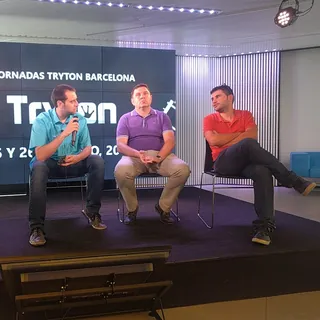
Jornadas Tryton confirms the growth of the ERP and its community
The 2018 Tryton Conference presented the new features in version 4.8 and practical ERP use cases ranging from veterinary management to quality control, distribution and e-commerce. The second day focused on technical topics, programming, mobile applications and combining programming languages.

Tryton
Tryton, the basics
Tryton is a robust, transparent, flexible and open-source ERP. This video from the 2018 Tryton Conference provides a broad overview of how it works, highlighting its strengths while also acknowledging its limitations.