NaN·tic explains the key factors that must be considered before choosing any ERP
Quick summary
An informative talk at the Parc Tecnològic del Vallès examines how to choose business management software and presents open source as a practical alternative for SMEs. The discussion stresses matching the tool to business needs, training, the role of the IT department, adaptability, licence costs, support and upgrades.
Contents
NaN·tic explains the key factors that must be considered before choosing any ERP
Twenty businesspeople attended an informative talk at the Parc Tecnològic del Vallès (PTV), whose aim was to highlight the key factors to consider before choosing any management software. NaN·tic presented open-source software as a “real, economical and reliable” alternative to traditional software.
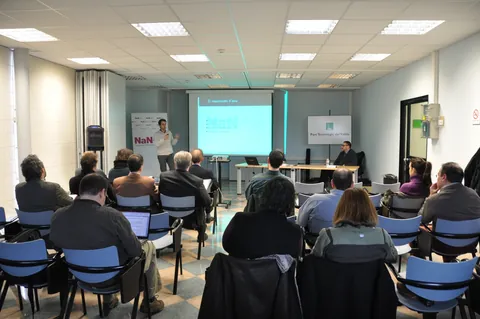
CERDANYOLA – Albert Cervera, co-founder of NaN·tic, detailed the “key factors” that any business manager involved in the decision to acquire business software should consider. Cervera recommended that attendees “carefully assess whether the programme they are interested in does what they need; train thoroughly to minimise risks; take the company’s IT department’s opinion into account and, finally, think about today’s needs as well as the future implications of the decision”. Cervera asked businesspeople to consider open-source software as a “real, economical and reliable” alternative to traditional proprietary software that charges for licences.
During the informative session, NaN·tic’s co-founder listed the many multinationals that use open-source software to produce their flagship products. He mentioned Google, Facebook, Twitter, and major banks and insurers, but also wanted to explain that it “can also be very useful for real companies, for our local SMEs”. In Cervera’s view, it is also important to bear in mind that if a company opts for open-source software, “companies with an IT department will have all the software know-how and will be able to modify and adapt whatever they need at any time, with all the advantages that this entails”.
During the questions, some attendees expressed their concerns about the decision to acquire software that is critical to the company’s daily operations. Moving to new versions, licence costs, support and operating guarantees were the main topics of interest.
Frequently asked questions
What should a company assess before choosing business management software?
The company should check that the programme meets its needs, provide training to reduce risks, involve its IT department, and consider both current requirements and the future implications of the decision.
Can open-source software be an option for SMEs?
Yes. The article presents it as a real, economical and reliable alternative for SMEs, not only for large multinationals.
What advantage can open-source software offer a company with an IT department?
The IT department can retain knowledge of the software and modify or adapt it to the company’s needs.
What concerns did attendees raise about acquiring business software?
The main concerns were moving to new versions, licence costs, support and guarantees that the software would operate properly.
Related articles

Sucess Stories
Industrias del Caucho PALSA: the best open source ERP also adapts to family industrial companies
Industrias del Caucho PALSA describes how a tailored Tryton ERP brought accounting, production, purchasing, sales and stock management together in one tool. The implementation reduced administrative time, provided real-time information and supported decisions based on actual figures, backed by a responsive consulting team.
ERP and Business
Phases of ERP implementation
A successful ERP rollout involves more than configuring software: it requires clear business goals, a workable plan and people who are ready for change. NaN-tic’s five-stage approach brings together consultancy, data migration, user training and rehearsals before go-live. A review after launch leads into ongoing support and continuous improvement.

ERP and Business
ERP: Does it adapt to you or do you conform with it?
Fitting a business into standard software is not the same as improving its processes; that takes analysis and collaboration with consultants. Tryton’s modular structure allows an ERP to be tailored without building an entirely new system. Keeping customisations up to date and adding functionality as needs change are essential parts of that approach.