Tryton ERP and NaN-tic, the stars of OpenExpo 2017
Quick summary
OpenExpo 2017 brought together thousands of professionals interested in open source, giving NaN-tic an opportunity to present Tryton both at its stand and in a talk about ERP software. The article highlights features such as online-shop integration and low-cost warehouse scanning, along with the company’s ongoing collaboration with the event.
Contents
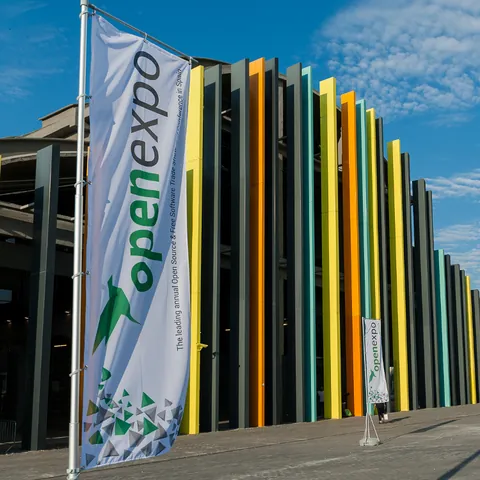
The growing interest in free software is no secret. You only have to look at the excitement generated by OpenExpo 2017, the annual conference held in Madrid on open source, open data and innovation. More than 3,000 professionals from the technology and business sectors gathered in the Spanish capital to learn first-hand about the trends and innovations shaping the sector.
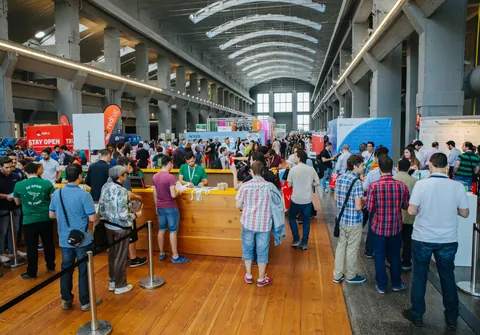
NaN-tic was one of the 200 companies with a permanent presence at the fair, with its own stand where dozens of people interested in discovering Tryton’s features and the alternative it offers to the market’s more traditional and well-known ERPs stopped by. We took the opportunity to showcase some of the most attractive features of Tryton ERP, such as the facilities it provides to anyone who wants an online shop integrated into the same website, and the adaptation of Tryton ERP to make it easier to scan products in warehouses at a very low hardware cost: around €200, compared with classic PDAs costing more than €2,000 each.
NaN-tic’s participation in OpenExpo 2017 was rounded off by the talk given by Albert Cervera, the company’s founding partner, on new trends in open-source business management tools.
Albert’s presentation focused on a review of the different open-source ERP alternatives currently available on the market and the reasons why NaN-tic chose Tryton. The session attracted great interest, to the extent that the room, with capacity for 50 people, proved too small.
NaN-tic’s collaboration with OpenExpo is not new. NaN-tic and OpenExpo have had a collaboration agreement for more than two years to produce and disseminate valuable content related to business and open source. As part of this agreement, numerous articles have been written and The Definitive Guide to Choosing Your Business Management Software, published by NaN-tic, has been distributed.
Albert Cervera also wrote an article on computer security that served as the opening piece for the ebook Open Source and Free Software Trends 2017, published by OpenExpo and based on contributions from 42 experts in free technologies from across Spain. Finally, it is also worth noting that NaN-tic took an active part in the previous year’s edition of OpenExpo.

Frequently asked questions
Which event put Tryton and NaN-tic in the spotlight?
OpenExpo 2017, a Madrid-based event focused on open source, open data and innovation.
Which Tryton features were demonstrated?
The presentation highlighted online-shop integration and an adaptation for scanning warehouse products with low-cost hardware.
What was Albert Cervera’s talk about?
It reviewed open source ERP alternatives and explained why NaN-tic had chosen Tryton.
What relationship did NaN-tic and OpenExpo maintain?
They had been collaborating for more than two years to produce and share useful content about business and open source.
Related articles
Open Source and Trends
Talking about new trends in open source business management software (ERPs)
COETIC hosted a NaN-tic talk on new trends in open source ERP software for computer engineering professionals. The session examined the architecture, programming language and technological features that set Tryton apart, followed by an informal discussion with attendees.

ERP and Business
ERP: Does it adapt to you or do you conform with it?
Fitting a business into standard software is not the same as improving its processes; that takes analysis and collaboration with consultants. Tryton’s modular structure allows an ERP to be tailored without building an entirely new system. Keeping customisations up to date and adding functionality as needs change are essential parts of that approach.
ERP and Business
Do you want more efficiency for less cost while improving business relationships?
EDI integration brings standardised electronic document exchange into the ERP, reducing manual administration, paper use and human error. More reliable accounting data and traceable exchanges also support financial planning and faster, safer B2B communication. Examples from Bon Preu Esclat and Nestlé show how these benefits apply to invoices, orders and inventory operations.