Debate: Open-source software for business
Quick summary
This article announces an event about the benefits of open-source software for businesses, featuring professionals and users of these tools. The session was set to discuss savings compared with licensed ERPs, technological advantages and the experience of organisations that had already adopted open source, as well as a presentation of Tryton 3.0.
Contents
Debate: Open-source software for business
Are you thinking of introducing management software in your company or replacing the one you already have? Before making a decision that could cost you a lot of money each year in licence fees, learn about open-source software. There are programmes and ERPs that you do not have to buy or pay to use. This so-called “free software” is already used by important organisations such as Danone, Allianz, Orange, Yamaha, Carrefour and the Col·legi de Periodistes de Catalunya. These companies, and many others, have achieved significant economic savings and other strategic advantages for their business by choosing open-source software.
To explain the advantages of these new tools, NaN·tic has organised an informative event that will take place next Thursday, 7 November, at 9:00 in the auditorium of the Barcelona Chamber of Commerce (Av. Diagonal 452, Barcelona). The event is entirely free and will feature professionals and users of open-source software for businesses, including Xavier Fuertes, manager of the Col·legi de Periodistes; Carles Garrigues, director of the UOC master’s degree in open-source software; and technology journalist Albert Cuesta, among others. During the session, there will also be a brief presentation of Tryton 3.0, the latest-generation open-source ERP.
What technological benefits can open-source software bring to business management? What annual savings could result from moving away from ERPs that charge for user licences? Which companies and organisations have already made the change? What do they think of it? These and many other questions will be answered at the round table “Open-source software in business environments”.
Frequently asked questions
What is open-source software in a business context?
It is a management software option that does not require buying or paying usage licences, presented in the article as an alternative to proprietary ERPs.
What business benefits are attributed to open-source software?
The text highlights cost savings and other strategic advantages for business development, as well as potential technological benefits.
Which ERP was scheduled to be presented during the event?
The event included a brief presentation of Tryton 3.0, described in the text as a latest-generation open-source ERP.
Which questions was the round table intended to answer?
It was intended to address the technological benefits of open-source software, the annual savings compared with licensed ERPs, and which organisations had adopted it and how they assessed the experience.
Related articles
ERP and Business
Phases of ERP implementation
A successful ERP rollout involves more than configuring software: it requires clear business goals, a workable plan and people who are ready for change. NaN-tic’s five-stage approach brings together consultancy, data migration, user training and rehearsals before go-live. A review after launch leads into ongoing support and continuous improvement.

ERP and Business
ERP: Does it adapt to you or do you conform with it?
Fitting a business into standard software is not the same as improving its processes; that takes analysis and collaboration with consultants. Tryton’s modular structure allows an ERP to be tailored without building an entirely new system. Keeping customisations up to date and adding functionality as needs change are essential parts of that approach.
Tryton
Tryton, now even better equipped
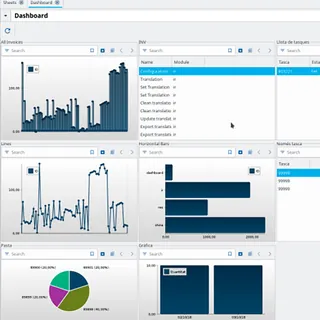
The 2019 Tryton Unconference introduced Shine, Papyrus and Printer, three tools developed to extend Tryton’s capabilities. Shine brings data work, calculations, charts and reports into the management environment, while Papyrus and Printer automate the inspection and capture of information from invoices and delivery notes.